

Choosing the Best AI for Software Development
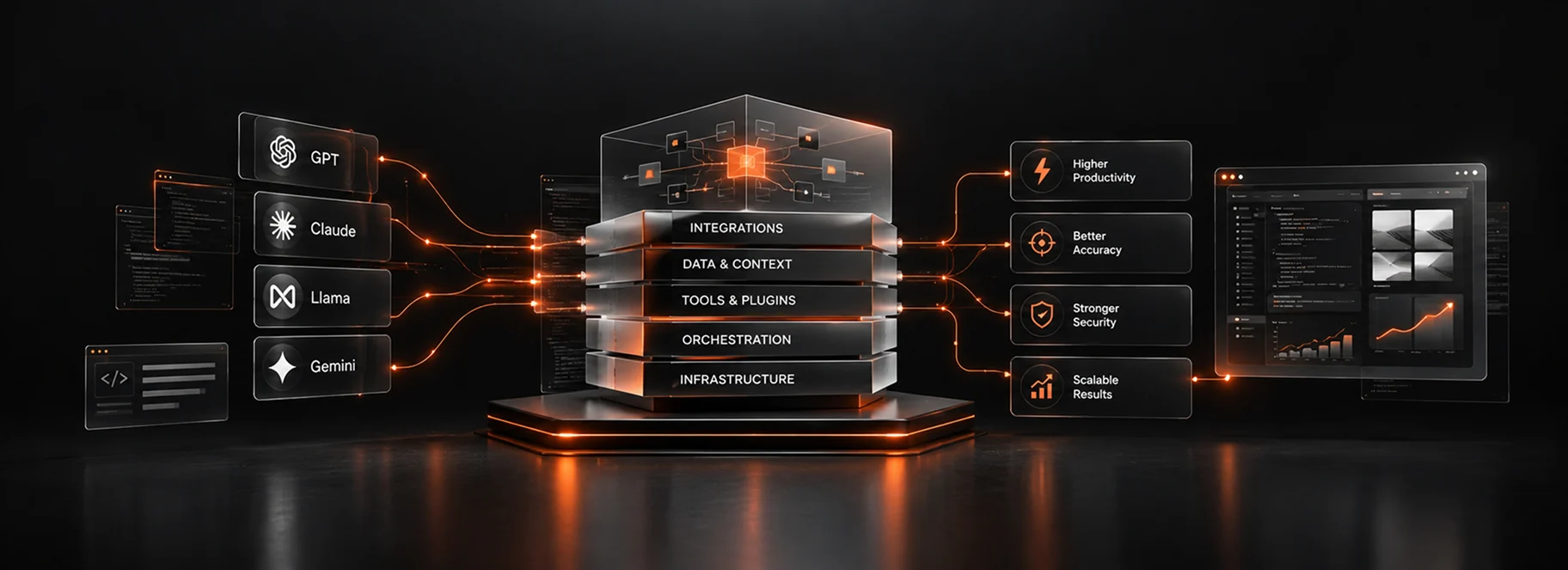
When engineering leads ask us which AI model or assistant is currently the best for software development, they are rarely looking for a simple model name. What they are usually asking is: Which platform can help our development team ship reliable features faster without creating technical debt we will have to undo next year?
The Landscape: Specialized Tools for Distinct Workflows
Rather than searching for a single "winner," it is more practical to group leading platforms by how they interact with your engineering stack.
- Frontier Foundation Models (Anthropic Claude 3.5 Sonnet & OpenAI GPT-4o): As general reasoning engines, these frontier models serve as the backbone for complex architectural reasoning, refactoring, and debugging across diverse frameworks. In benchmark evaluations and developer sentiment, Claude 3.5 Sonnet often demonstrates an exceptional grasp of nuanced logic, multi-file context, and front-end interface code, making it a primary choice for high-level architectural problem-solving.
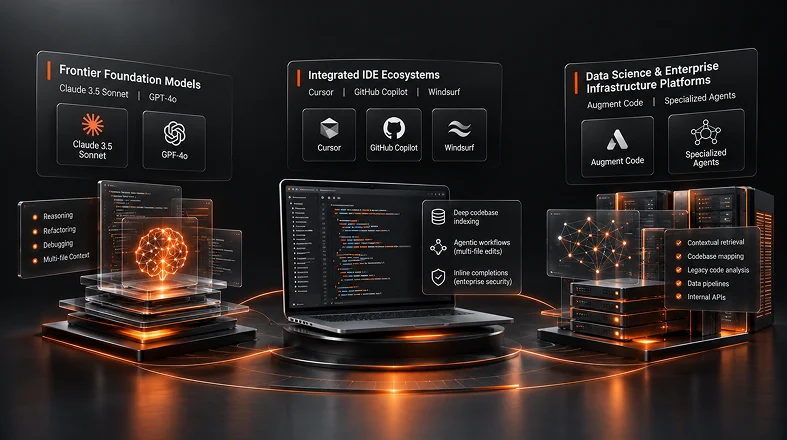
- Integrated IDE Ecosystems (Cursor, GitHub Copilot, & Windsurf): For daily developer velocity, specialized code editors and IDE extensions integrate model intelligence directly into the workspace. Cursor and Windsurf leverage deep codebase indexing and agentic workflows to edit multiple files simultaneously, while GitHub Copilot provides seamless inline completions backed by enterprise security frameworks.
- Data Science and Enterprise Infrastructure Platforms (Augment Code & Specialized Agents): Platforms designed specifically for large-scale enterprise repositories focus heavily on contextual retrieval and codebase mapping. Tools highlighted in developer analyses, such as Augment Code, excel at analyzing massive, legacy codebases to deliver context-aware code generation tailored to specific data pipelines and internal APIs.
Reframing the Decision: Contextual Awareness Over Code Generation
Generating code is no longer the primary bottleneck in digital product development. Understanding existing architecture is.
A Balanced View: Where AI Coding Assistants Fall Short
While AI coding tools significantly reduce routine boilerplate and accelerate prototype development, they carry distinct limitations that require active oversight:
- Security and License Compliance: Generative models can occasionally reproduce snippet patterns that introduce security vulnerabilities or license conflicts into proprietary repositories.
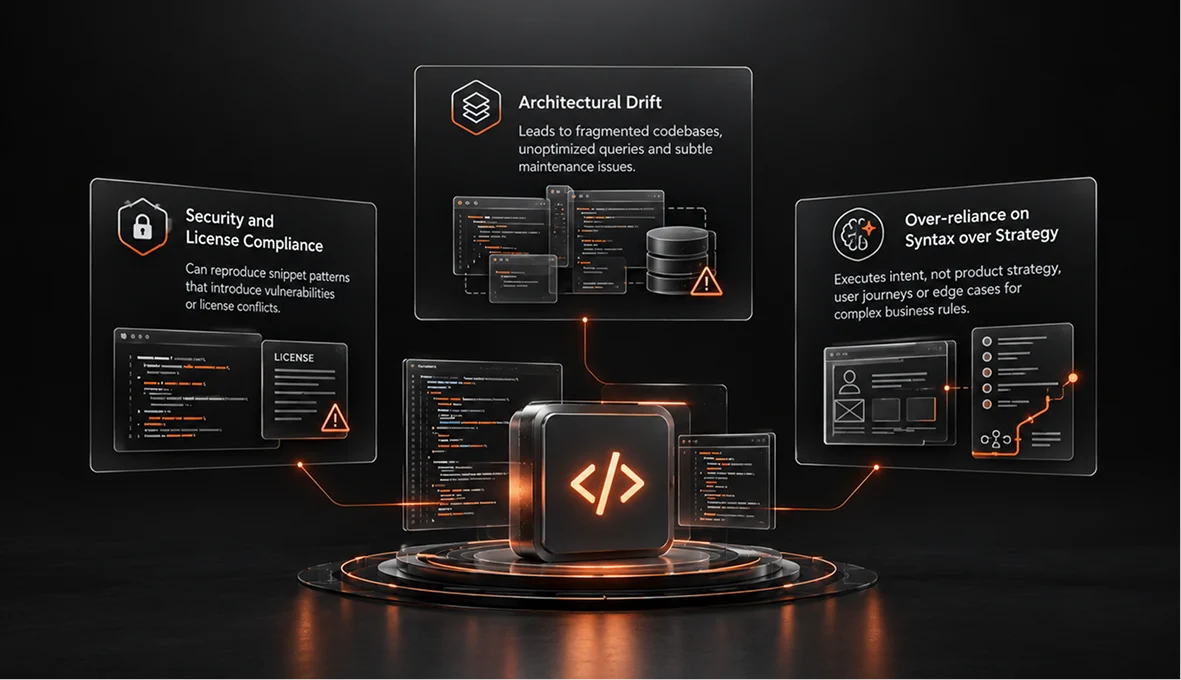
- Architectural Drift: Relying heavily on automated code generation without strict human code reviews often leads to fragmented codebases, unoptimized database queries, and subtle maintenance issues.
- Over-reliance on Syntax over Strategy: AI tools execute intent; they do not define product strategy, user journey logic, or edge-case handling for complex business rules.For enterprise teams, AI assistants should be deployed as force multipliers for skilled developers, not as substitutes for rigorous engineering architecture, QA testing, and design systems.
Navigating Your Engineering Stack
If your organization is evaluating how to integrate AI tools into your software development workflows, consider starting with these steps:
- Audit for Context: Test AI tools against your actual codebase and design system rather than relying on public benchmarks.
- Establish Governance: Define clear guidelines around code security, data privacy, and mandatory human review processes.
- Align Design and Code: Ensure your development tools integrate directly with your design tokens in Figma and web frameworks like Webflow or React for seamless deployment.Are your engineering workflows built for speed, security, and long-term scale? Reach out to the team at BranStr to explore how a modern, integrated approach to UI/UX, development, and AI technology can elevate your digital products.Choosing the best AI coding assistant isn't about finding the tool that writes the most code, it's about finding the platform that truly understands your codebase. Explore how leading models like Claude, Cursor, and Copilot compare when applied to enterprise software development.