
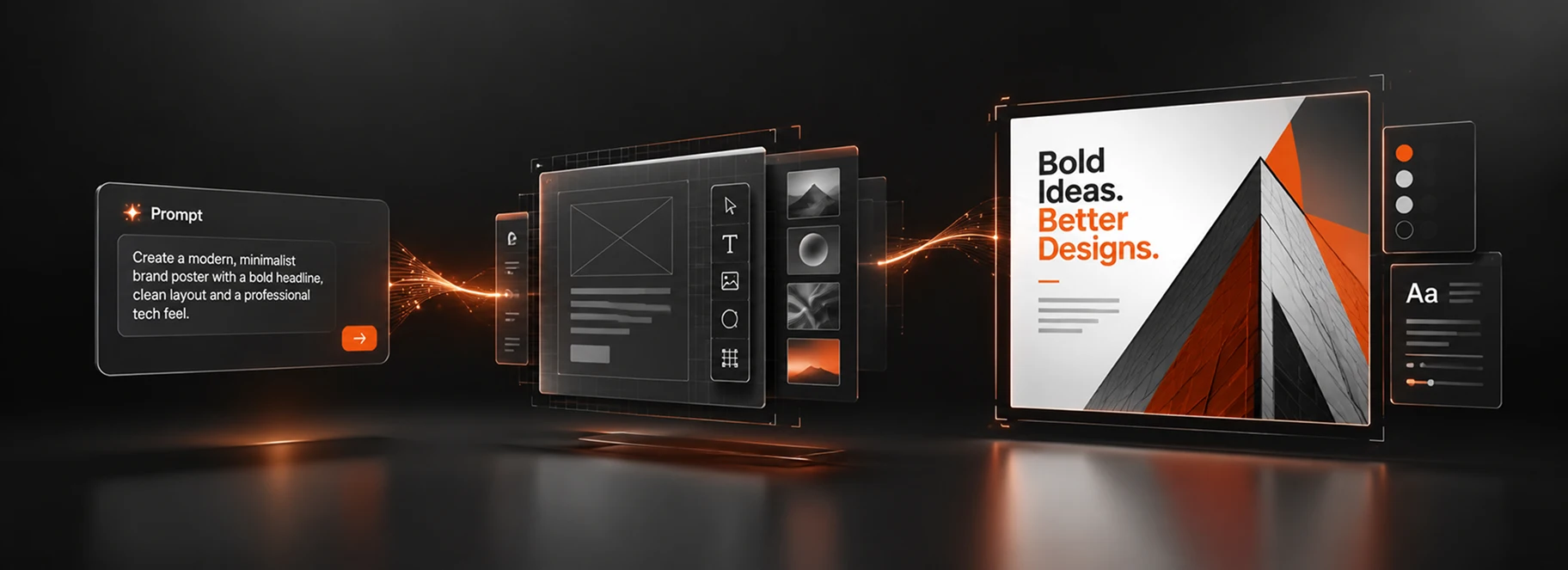
Engineering AI Design
Artificial intelligence is introducing new possibilities for graphic designers, marketing teams, and businesses creating digital content.
What Is AI Graphic Design?
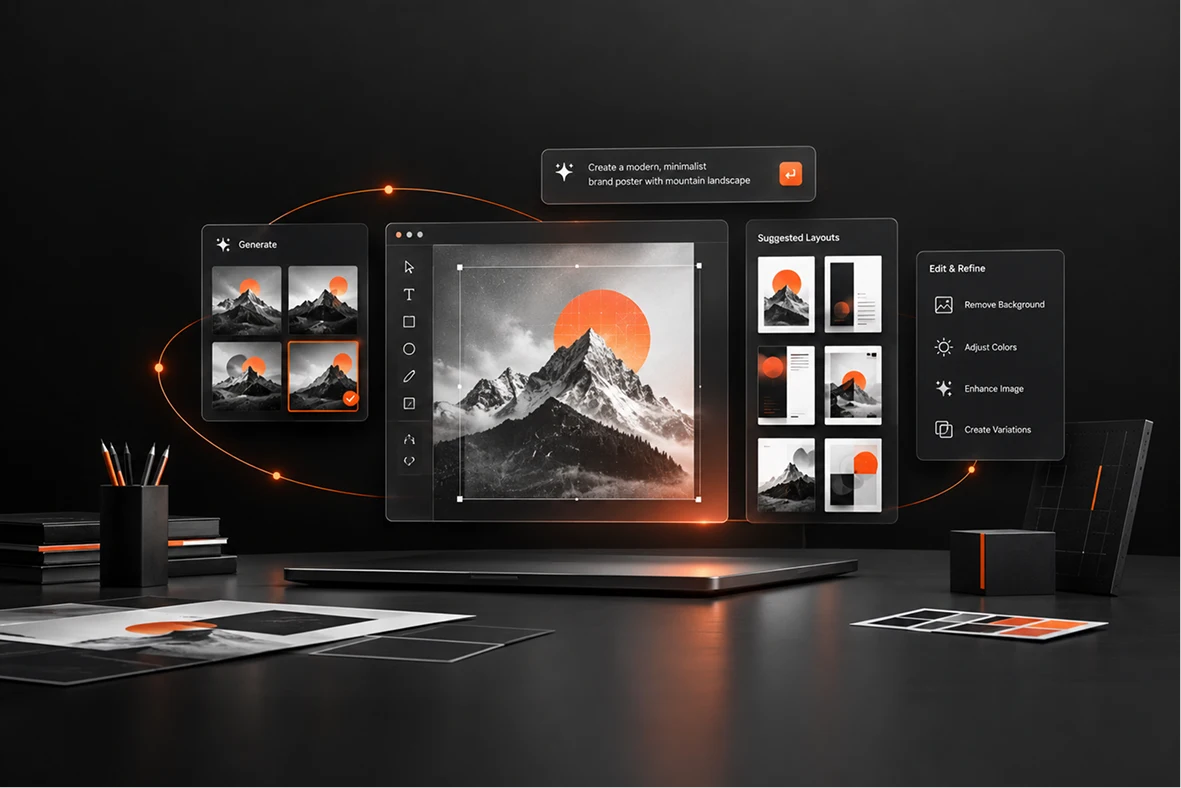
AI graphic design refers to the use of artificial intelligence to assist with visual creation and related design tasks.
Start With a Clear Creative Brief
The quality of a design depends on more than the prompt used to generate it.
- The target audience.
- The main message.
- The intended platform and dimensions.
- The brand's visual identity.
- The desired emotional response.
- The action the audience should take.For example, a social media campaign promoting a website redesign service needs a different visual approach from an educational post about typography.The brief helps ensure that creative exploration remains connected to the actual communication objective.
Use AI to Explore Visual Directions
AI can help designers investigate different approaches before committing to a final concept.
- Minimal editorial: Strong typography, deliberate spacing, and restrained imagery.
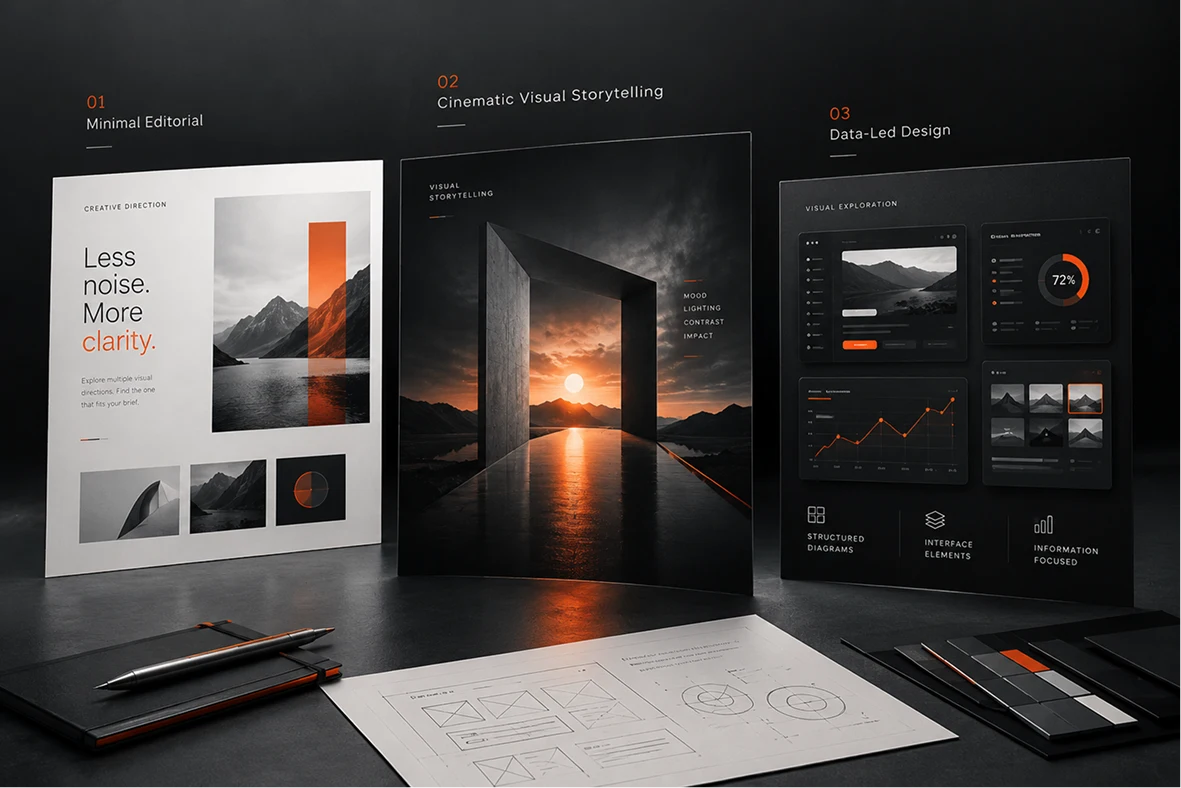
- Cinematic visual storytelling: Dramatic lighting, strong contrast, and a central visual metaphor.
- Data-led design: Structured diagrams, interface elements, and information-focused layouts. These directions should serve the brief rather than follow whatever visual style is currently popular.Once the strongest direction is selected, the designer can develop a more coherent composition.
Turn Generated Images Into Brand-Ready Assets
AI-generated images often need refinement before they can be used professionally.
- Selecting the most relevant generated concept.
- Refining the composition and focal point.
- Correcting visual artefacts.
- Adding accurate typography and approved brand elements.
- Adjusting contrast, colour, and spacing.
- Preparing the asset for the intended platform.
- Checking licensing, rights, and final quality.For text-heavy graphics, it is often better to generate the visual background separately and add the final typography using a design tool.This keeps important text readable and editable.
Maintain Visual Consistency Across Campaigns
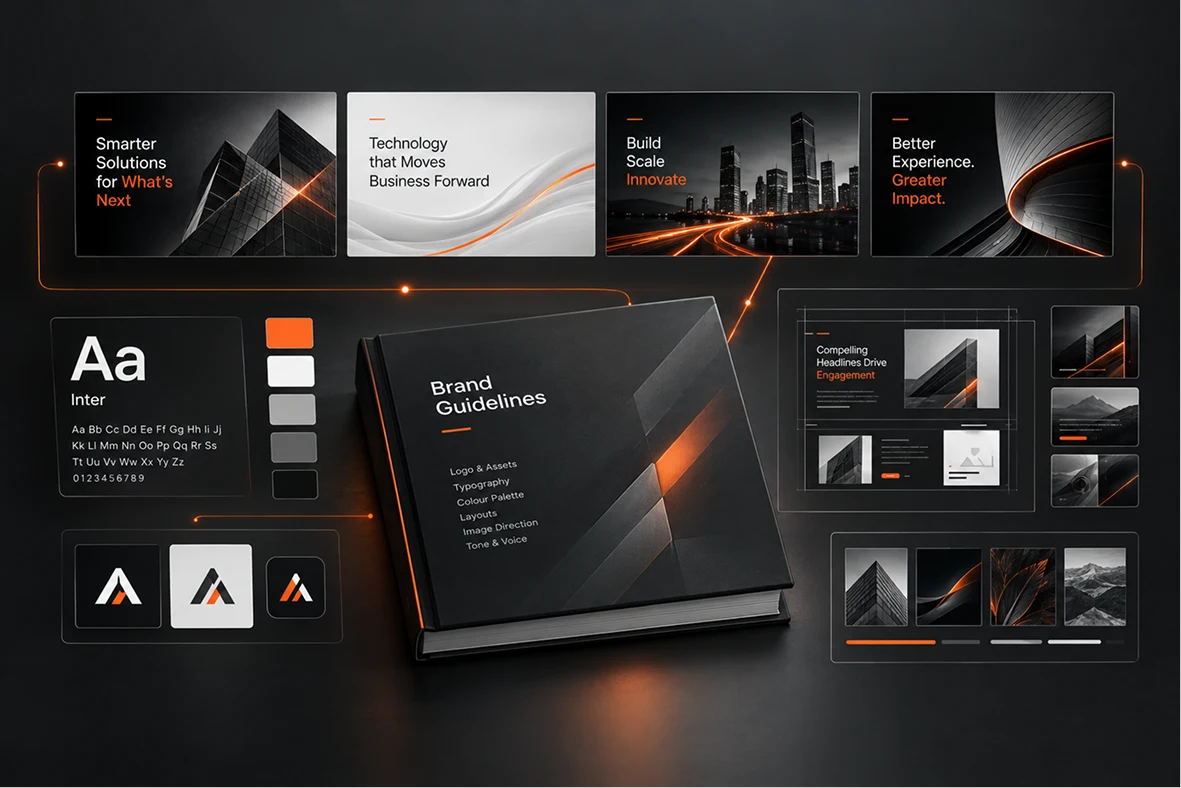
A collection of attractive images does not automatically form a coherent brand identity.
Use AI Without Replacing Design Thinking
AI can accelerate exploration, but design requires decisions about communication and usability.
Understand Copyright and Commercial Use
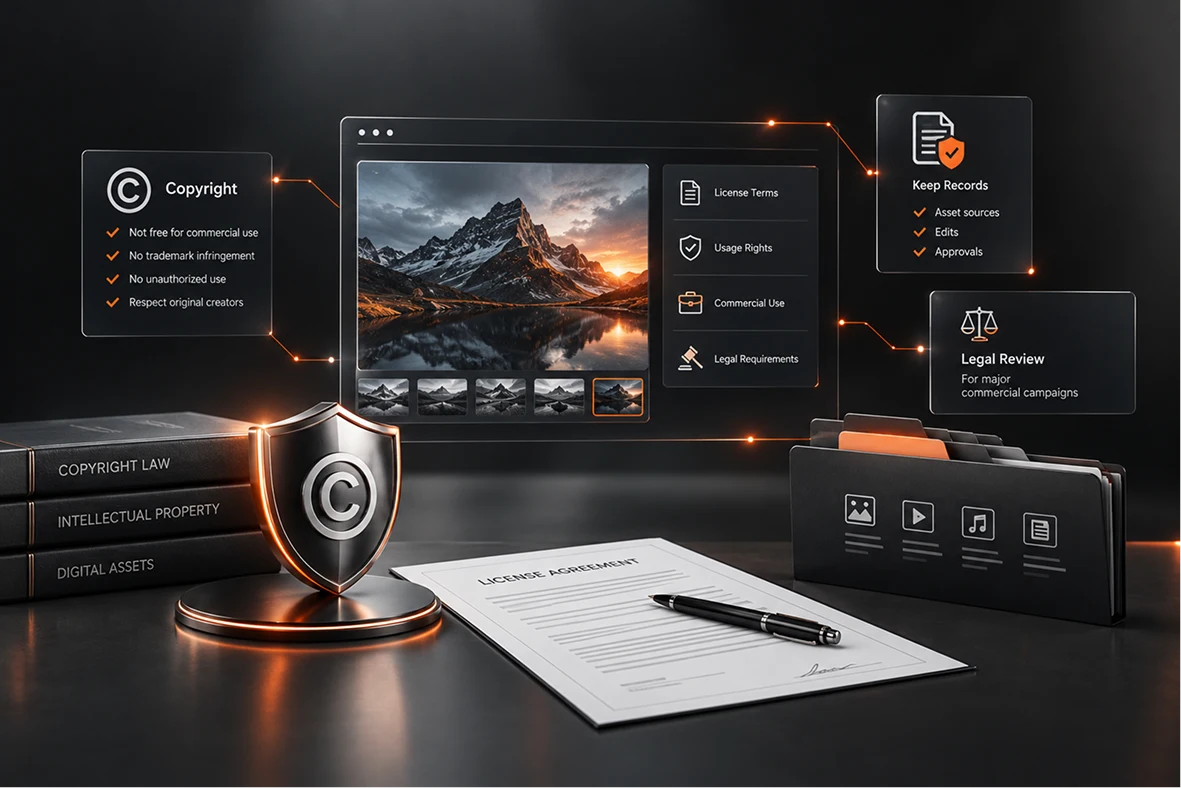
Before publishing AI-generated visuals, review the tool's current terms, usage rights, and applicable legal requirements.
Build an Effective AI-Assisted Design Workflow
A practical process can be divided into five stages:
- Brief: Define the message, audience, platform, and creative objective.
- Explore: Generate alternative visual directions and references.
- Direct: Select the strongest concept based on the brief.
- Refine: Apply typography, layout, brand guidelines, and production finishing.
- Review: Check quality, consistency, accessibility, and usage rights.This workflow combines AI-assisted exploration with human judgment at the stages where it matters most.
Conclusion
AI is expanding the creative possibilities available to designers and businesses. It can help teams explore more directions and reduce friction during selected stages of production.